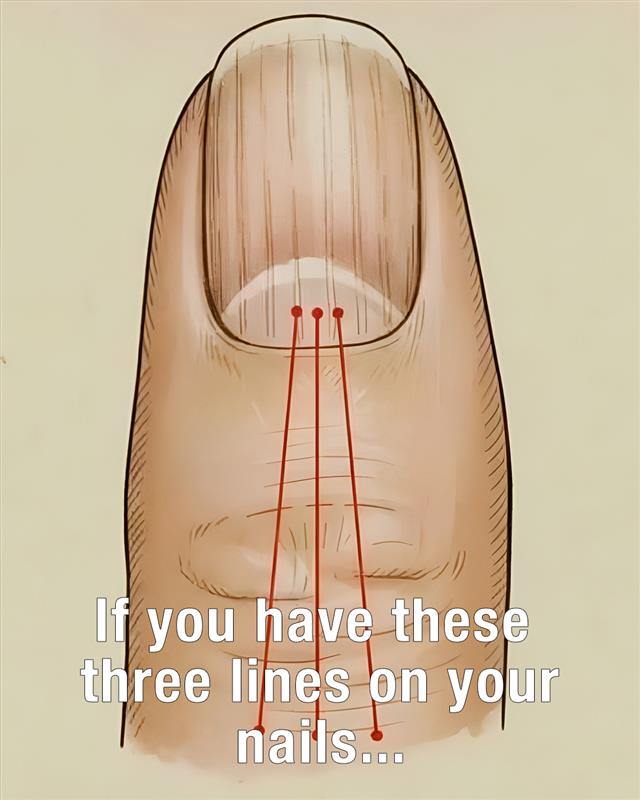
So, what should you do if your nails don’t appear that way? Let’s delve deeper.
The state of our nails can reveal much about our overall health—a fact acknowledged for centuries. Traditional Chinese medicine has utilized nail observation as a means to assess the body’s well-being for a long time.
In some Muslim countries, where male doctors historically faced restrictions in examining women, practitioners advanced this practice, as nails were one of the few areas they could safely inspect.
Even now, many acupuncturists employ nail analysis as a method to gauge a patient’s general health.
What those ridges on your nails might indicate
Have you ever noticed lines extending from the base of your nail to the tip? This phenomenon is known as longitudinal ridging, or onychorrhexis in medical terminology. These vertical ridges can range from subtle to very pronounced, sometimes covering just a small area of your nail—or in severe instances, up to 70% of the nail surface.
Those tiny ridges may appear harmless — but at times, they could be signaling something about your health. It might suggest an underlying issue, or even a previous injury.
Many individuals observe vertical ridges as they grow older, and in most situations, they are entirely harmless. The primary reason vertical or longitudinal nail ridges develop — when there’s no underlying disease — is typically due to dryness and inadequate nutrition. As nails age, they become less effective at absorbing nutrients, which can slow their growth and make ridges more prominent.

However, these lines may also appear if you have specific skin issues, such as eczema or very dry skin. As reported by News Medical, vertical lines on your nails can result from various medical conditions, including systemic amyloidosis, nail-patella syndrome, collagen vascular diseases, graft versus host disease, and rheumatoid arthritis.
If your nails are brittle, break easily, or appear unusually thick, this might indicate thyroid issues, such as hypothyroidism. Some individuals even observe their fingertips becoming slightly puffy, or their nails taking on a more rounded shape.
Horizontal ridges: A more significant concern
Horizontal ridges — or indentations across your nails — are known as Beau’s lines, and they typically suggest that your nail growth has been disrupted. The causes can vary from temporary issues to more serious conditions:
- Chemotherapy
- Prolonged use of gel or acrylic nails
- Nail injury (like slamming your fingers or dropping objects)
- Severe illnesses with high fevers, including COVID-19, pneumonia, or measles
- Peripheral vascular disease

Could your diet be the culprit?
Absolutely! Your nails can actually indicate nutrient shortages.
A lack of zinc may appear as Beau’s lines or white spots on your nails.
Iron deficiency can lead to vertical ridges — or even spoon nails (where the center of your nail dips like a small bowl). Fun fact: you could actually hold a drop of water in that little scoop!
And while we’re discussing nail health, it’s important to look out for some common nail color changes.
- Yellow nails: This could indicate liver or gallbladder problems, fungal infections, a deficiency in vitamin E, chronic bronchitis, asthma, or side effects from medications. Staining from nail polish or smoking is also quite common.
- Pale nails: This might suggest anemia or a lack of vitamin B12.
Blue nails: These can signal oxygen deficiency, poor circulation, or issues with the heart and lungs. - Colorless nails: Often a sign of a low red blood cell count.
Your nails might just be offering a glimpse into your overall health — so the next time you spot a ridge, it could be worth taking a closer look. If you see ridges, lines, or dents, don’t ignore them. Consult your doctor to understand what’s happening and how to address it.
With proper care, new, smoother nails can grow in over time. And if your ridges aren’t related to a health concern, simple at-home nail care can make a significant difference. Keep them healthy, and they’ll continue to tell the story of your body.