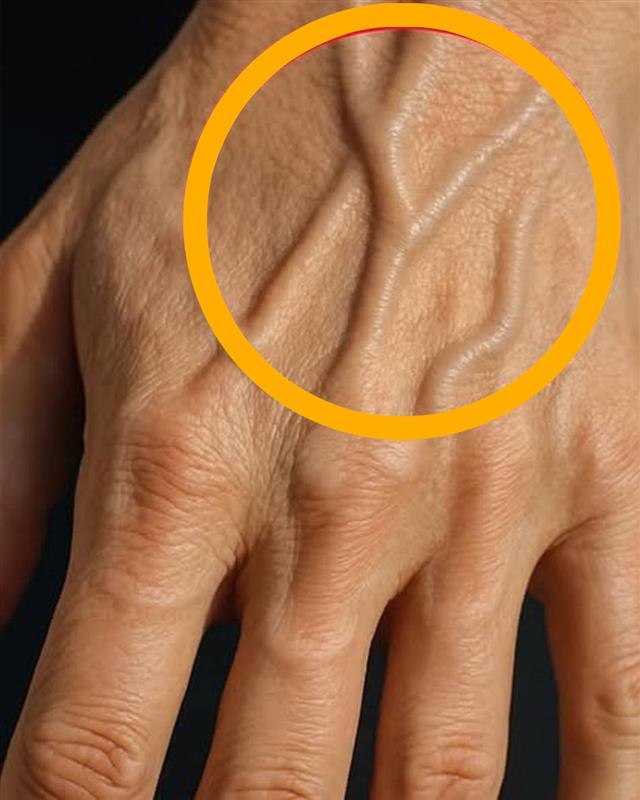
Did you realize that those protruding veins could be more than just a cosmetic concern — they might actually indicate a higher risk of dangerous blood clots?
Closer than you think
Those blue veins on your hands aren’t just random occurrences. They form a network of superficial veins located just beneath your skin.
When certain changes occur in your skin or body, these veins can suddenly become more prominent — sometimes alarmingly so.
For many individuals, particularly those with lighter or thinner skin, these veins are more visible. This is because lighter skin tones and less fat beneath the skin make the veins less concealed. Older adults also tend to have more noticeable veins simply because their skin becomes thinner with age.
Why some people’s veins appear extra blue
If you’re very thin or a dedicated athlete, those veins might be even more pronounced. When you exercise or lift heavy weights, your muscles swell and push those veins closer to the surface — which is why weightlifters often have those “pop-out” veins that many admire. Pregnant women also frequently notice more prominent veins as their circulatory system works harder than usual.

However, there is another aspect to consider. Occasionally, blue or swollen veins may indicate varicose veins — veins that have become elongated, twisted, and weakened.
On your hands, they may appear as thick, rope-like, zigzag patterns that are larger than usual. Although they are often painless, varicose veins can lead to discomfort and may sometimes indicate more serious health issues.
When blue veins might signal a problem
If you observe your veins becoming swollen or painful, or if they begin to show signs of redness, swelling, or warmth, it’s important not to overlook these symptoms.
These could be indicators of blood clots or other vascular concerns that require prompt medical attention. Conditions such as deep vein thrombosis (DVT) or pulmonary embolism can pose serious risks to your life.
How to maintain healthy veins
While you may not be able to prevent veins from becoming visible, there are several strategies to promote their health:
- Stay active. Regular movement of your legs and hands enhances circulation.
- Keep a healthy weight. Reducing pressure on your veins is beneficial.
- Avoid prolonged periods of sitting or standing. Make sure to take breaks and stretch.
- Quit smoking. It harms your veins and disrupts blood flow.
- Opt for loose-fitting clothing. Tight garments can impede blood circulation.
If varicose veins become an issue, treatment options vary from compression stockings and lifestyle modifications to medical interventions like sclerotherapy or surgery. However, the most important step is to consult your doctor if you notice any sudden changes or experience pain.

The key point: stay calm, but don’t overlook it.
Prominent blue veins can simply be a normal aspect of your body — particularly if you have fair skin, are slender, or lead a very active lifestyle. According to the Cleveland Clinic, you’re certainly not the only one worried about protruding veins. This is a fairly widespread concern, and in most instances, there’s no reason for alarm. In fact, approximately one in three adults experience varicose veins, which are a primary cause of veins appearing more pronounced.
However, if they bulge, pulse, or appear swollen, it’s essential to seek medical advice. Your veins could be signaling something significant regarding your heart and circulatory health.