
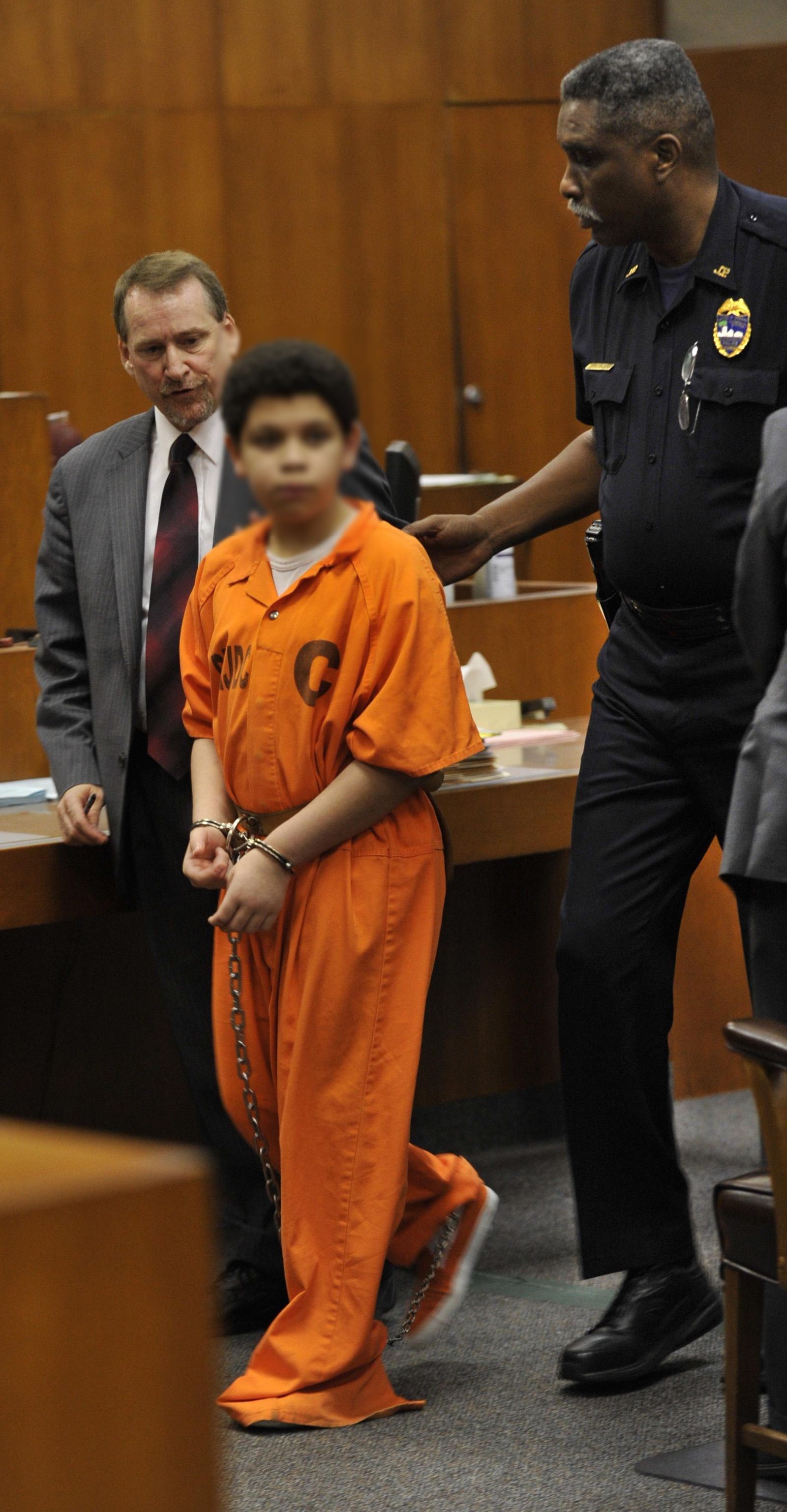
In a quiet holding cell, a young man once waited for a decision that would shape the rest of his life. His story, like many others, was not defined by a single moment but by a chain of circumstances that began long before the courtroom. His final request, often referenced in discussions about justice, has become symbolic of a broader debate that continues to unfold across the United States.
Cases like these invite society to confront deeply complex questions. How should the justice system respond when a child commits a serious crime? Where does accountability meet compassion? And perhaps most importantly, can a person who made a grave mistake in youth truly change over time?
Understanding Juvenile Sentencing in Context
The United States has one of the highest incarceration rates in the world, a fact frequently highlighted by organizations such as Human Rights Watch and Equal Justice Initiative. Within this system, juvenile sentencing remains one of the most debated areas.
Some individuals have received life sentences for actions committed before the age of 14. These cases vary widely. In some instances, the individual directly carried out a serious offense. In others, they were held legally responsible under theories such as accomplice liability.
Behind every statistic is a unique story shaped by environment, upbringing, and circumstance. Many young defendants come from backgrounds marked by poverty, instability, or limited access to education. While these factors do not excuse harmful actions, they provide important context for understanding behavior.
The Science of Adolescent Development
Modern research in Neuroscience and Developmental Psychology has significantly influenced how society views juvenile responsibility.
Scientists have found that the human brain continues to develop well into early adulthood. Areas responsible for impulse control, decision-making, and long-term planning are among the last to mature. This means that adolescents often process risk and consequences differently than adults.
From a scientific perspective, this developmental stage suggests a greater capacity for change. Young individuals are more adaptable, more responsive to intervention, and more capable of rehabilitation over time.
This understanding has played a key role in shaping modern legal approaches to juvenile sentencing.
The Role of the Supreme Court
The Supreme Court of the United States has addressed juvenile sentencing in several landmark decisions.
In 2012, the Court ruled that mandatory life sentences without the possibility of parole for juveniles are unconstitutional. This decision emphasized the need for individualized sentencing that considers the unique circumstances of each case.
In 2016, the Court extended this principle by ruling that the decision must be applied retroactively. This opened the door for many individuals to seek sentence reviews.
These rulings did not eliminate life sentences for juveniles entirely. Instead, they required courts to consider factors such as age, background, and potential for rehabilitation before imposing the most severe penalties.
Variations Across States
Despite federal guidance, implementation has varied widely across states. Some jurisdictions have taken proactive steps to review past cases and expand parole opportunities. Others have moved more cautiously, resulting in significant differences depending on location.
This variation reflects the decentralized nature of the U.S. legal system, where states retain considerable authority over criminal justice policies.
As a result, two individuals with similar cases may experience very different outcomes based solely on geography.
Accountability and Public Safety
Any discussion of juvenile sentencing must also consider the impact on victims and communities. Serious crimes can cause lasting harm, and public safety remains a central priority.
Communities expect the justice system to provide protection and accountability. Families affected by crime often seek closure and recognition of their experiences.
These realities are essential to the conversation. A balanced system must acknowledge harm while also considering the broader context of each case.

The Argument for Rehabilitation
Advocates for reform argue that the justice system should recognize the potential for growth and change. They emphasize that children are not fully formed adults and should not be judged as such.
Organizations like the Equal Justice Initiative have promoted the idea of meaningful parole opportunities. This does not guarantee release but allows for periodic evaluation based on demonstrated rehabilitation.
From this perspective, accountability and second chances are not mutually exclusive. A system can uphold responsibility while still allowing for the possibility of transformation.
Cultural and Moral Perspectives
Beyond law and science, the debate touches on fundamental cultural values. How a society treats its youngest offenders reflects its broader beliefs about justice, responsibility, and human potential.
In many cultures, childhood is seen as a time of learning and growth. Mistakes, even serious ones, are viewed within the context of development.
This raises important ethical questions. Should a decision made at age 13 define an entire lifetime? Should the legal system leave room for redemption?
There are no easy answers. These questions require careful consideration and ongoing dialogue.
The Role of Media and Public Awareness
Media coverage has played a significant role in shaping public understanding of juvenile sentencing. Stories that highlight individual cases often bring attention to broader systemic issues.
However, media narratives can vary in tone and depth. Some focus on legal details, while others emphasize emotional aspects. For readers, it is important to approach these stories with a critical mindset, distinguishing between verified information and interpretation.
Increased awareness has contributed to policy discussions and, in some cases, legislative reform.

Toward a More Balanced System
Many experts believe that a balanced approach is essential. This includes several key elements.
First, individualized sentencing ensures that each case is evaluated on its own merits. Second, access to education and rehabilitation programs supports positive development. Third, structured parole systems allow for periodic reassessment.
These measures aim to create a system that is both fair and effective, protecting public safety while recognizing human potential.
A Continuing National Conversation
The debate over juvenile life sentences is ongoing. Legal decisions, scientific research, and public opinion continue to shape the conversation.
Each case contributes to a larger understanding of how justice systems can evolve. Policymakers, legal professionals, and communities all play a role in this process.
As new evidence and perspectives emerge, the discussion will likely continue to develop.
Conclusion: Justice, Growth, and Human Curiosity
At its core, the question of juvenile life sentences is about more than law. It is about how society understands growth, responsibility, and the possibility of change.
Human curiosity drives us to examine these complex issues, to ask difficult questions, and to seek better solutions. While there may never be a single answer, the ongoing conversation reflects a commitment to fairness and progress.
By balancing accountability with an understanding of human development, societies can move toward systems that are both just and compassionate.