It’s much more prevalent than many people think, but since the experience can feel surreal and often frightening, a lot of individuals are reluctant to discuss it.
30% of people will encounter it.
Most individuals have never heard of a sleep disorder called sleep paralysis. However, it’s something that many of us will face at least once in our lives—whether we recall it or not.
Sleep paralysis is a medical condition that happens in the moments just before you drift off to sleep or as you’re waking up. During an episode, a person finds themselves unable to move or speak, even though they are mentally awake.
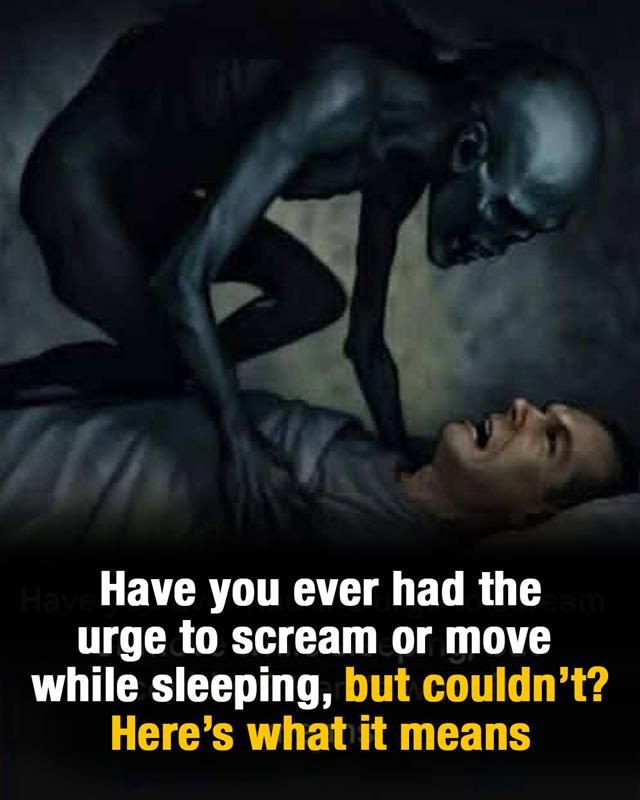
It’s also common to have hallucinations or out-of-body experiences, which can make the situation feel particularly terrifying.
According to the Cleveland Clinic, sleep paralysis occurs “when your body is in between stages of sleep and wakefulness.” Episodes typically last from a few seconds to a couple of minutes and are categorized as a type of parasomnia. While the experience can be alarming, sleep paralysis is entirely harmless.

Researchers believe that approximately 30% of individuals will encounter sleep paralysis at least once during their lives.
It can occur either as you are drifting off to sleep or just as you are waking up. Typical symptoms include an inability to move or speak, a feeling of pressure on the chest, the sensation of being outside your body, vivid hallucinations, and overwhelming fear or panic. Some episodes may last only a few moments, while others can extend up to 20 minutes.
So, what triggers it?
During REM sleep—the phase when most dreaming takes place—your brain temporarily “turns off” your muscles. This mechanism prevents you from physically acting out your dreams. Sleep paralysis occurs when your mind awakens before your body, leaving you aware but unable to move.
This mismatch is often triggered by:
- High stress
- Poor or irregular sleep
- Anxiety
- Exhaustion
- Disrupted sleep patterns
Numerous studies indicate that individuals who are fatigued, stressed, or suffering from sleep deprivation are more prone to experience sleep paralysis, as noted by sleep expert and CBT psychologist Charlott Ulfsparre.
Even though it can be frightening, sleep paralysis is not harmful and is not classified as a disease. It is a natural occurrence that humans have sought to understand for centuries. Ancient Persian medical writings referenced it in the 900s, and one of the earliest documented cases was noted by a Dutch physician in 1664.

Various cultures have their unique interpretations — in Japan, it’s referred to as being “bound by steel,” while Chinese folklore describes it as “ghost pressure,” and in certain African regions, it’s known as “a devil riding on your back.”
Some individuals also encounter vivid hallucinations. Many report sensing a presence in the room, feeling someone sitting on their chest, or experiencing an overwhelming sense of dread. Swedish artist Jonna Jinton has shared her first encounter at the age of 16, recounting a peculiar vibration and the feeling of being drawn into something. Singer Zara Larsson has also candidly discussed her own terrifying experiences.
Tips for preventing sleep paralysis:
- Maintain a consistent sleep routine
- Minimize stress
- Steer clear of screens before going to bed
- Establish a tranquil sleep setting
If an episode occurs, concentrate on slow, deep breathing and try to move just one finger or toe. Once you regain a small amount of movement, the rest of your body typically follows suit.
Disseminating information about sleep paralysis can aid more individuals in comprehending what they are experiencing—and reassure them that this unsettling phenomenon is temporary, understandable, and not harmful.
If you know someone who could benefit from this information, please share it with them.