WASHINGTON (AP) — Iran shooting down two American military aircraft marks an exceedingly rare assault for the U.S. that has not happened in more than 20 years and shows the Islamic Republic’s continued ability to hit back despite President Donald Trump asserting it has been “completely decimated.”
The attacks came five weeks after U.S. and Israeli strikes first pounded Iran, with Trump saying earlier this week that Tehran’s “ability to launch missiles and drones is dramatically curtailed.”
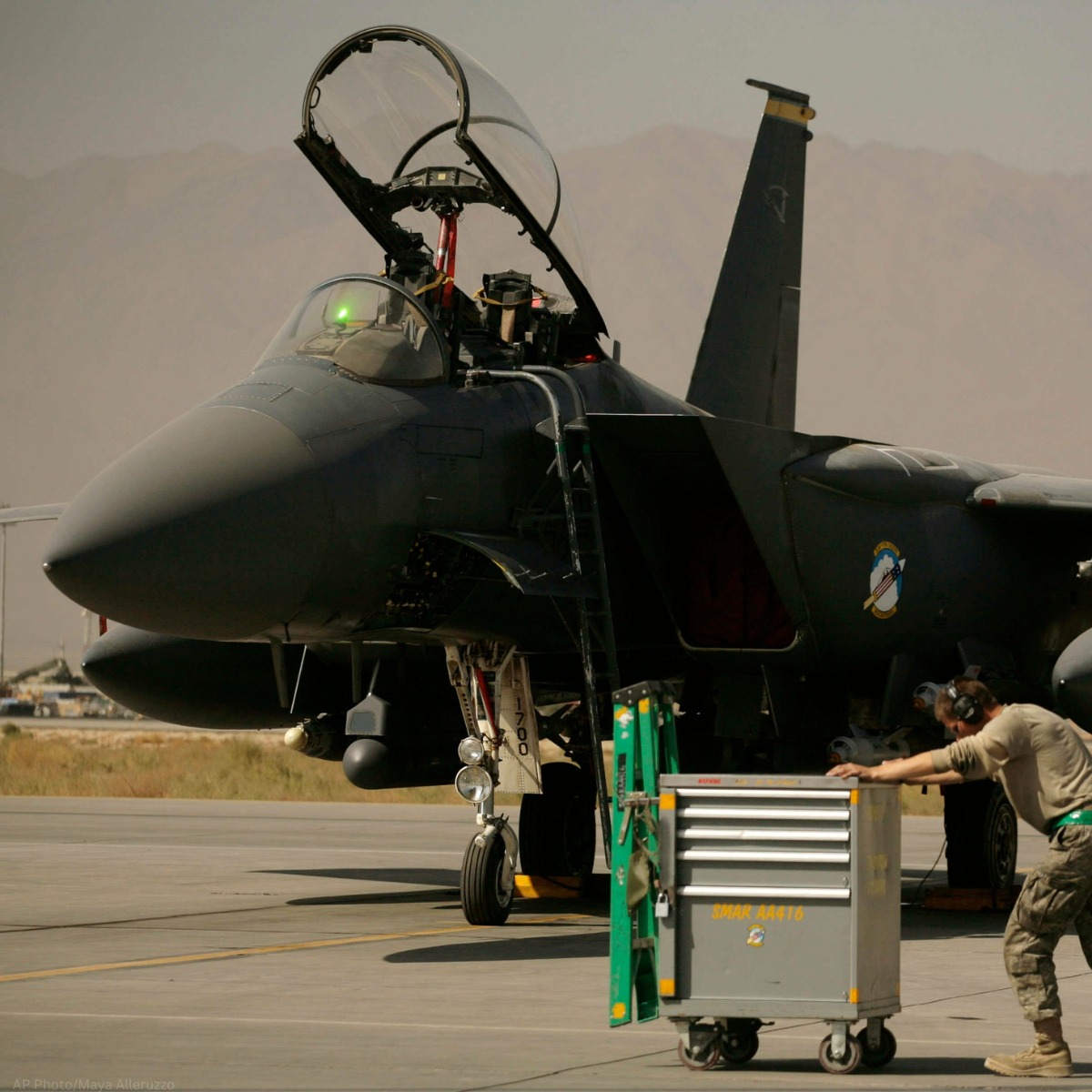
Iran shot down a U.S. F15-E Strike Eagle fighter jet Friday, with one service member getting rescued and the search still underway for a second, U.S. officials say. Iranian state media also said a U.S. A-10 attack aircraft crashed after being hit by Iranian defense forces.
The last time a U.S. fighter jet was shot down in combat was an A-10 Thunderbolt II during the 2003 U.S. invasion of Iraq, said retired Air Force Brig. Gen. Houston Cantwell, a former F-16 fighter pilot.
But, he said, that’s because the U.S. had largely been fighting insurgents who didn’t have the same anti-aircraft capabilities. The fact that there have not been more fighter jets lost in Iran, Cantwell said, is a testament to the capabilities of U.S. forces.
“The fact that this hasn’t happened until now is an absolute miracle,” said Cantwell, who served four combat tours and is now a senior resident fellow at the Mitchell Institute for Aerospace Studies. “We’re flying combat missions here, they are being shot at every day.”
Shoulder-fired missile likely used, experts say
U.S. Central Command said in a statement Wednesday that American forces have flown more than 13,000 missions in the Iran war while striking more than 12,300 targets.
After more than a month of punishing U.S.-Israeli airstrikes, a degraded Iranian military nonetheless remains a stubborn foe. Its steady stream of strikes against Israel and Gulf Arab neighbors have been causing regional upheaval and global economic shock.
When it comes to American dominance over Iran’s airspace, there’s still a distinction between air superiority and air supremacy, said Behnam Ben Taleblu, Iran program senior director at the Foundation for Defense of Democracies, a hawkish Washington think tank.
“A disabled air defense system is not a destroyed air defense system,” he said. “We shouldn’t be shocked that they’re still fighting.”
American planes have been flying missions at lower altitudes, which makes them more vulnerable to Iran’s missiles, Taleblu said. It’s possible that Iran fired at the F-15 with a surface-to-air missile, but it’s more likely that a portable, shoulder-fired missile was used, he said. Those are much harder to detect and reflect how Iran is “weak but still lethal.”
“This is a regime that is fighting for its life,” he said.
Mark Cancian, a retired Marine colonel and a senior defense adviser with the Center for Strategic and International Studies, agreed that a shoulder-fired missile was likely used against the fighter jet.
Nonetheless, the American air war against Iran has been a “tremendous success” so far, he said.
To put things in perspective, he said the loss rate for American warplanes flying over Germany during World War II was 3% at one point, which would equal about 350 warplanes in the U.S. war against Iran.
“But then there’s the political side — you have a American public that is accustomed to fighting bloodless wars,” Cancian said. “Then a large part of the country doesn’t support the war. So to them, any loss is unacceptable.”
Pilots are trained on what to do if their plane is hit
The last U.S. jet shot down in combat was struck by an Iraqi surface-to-air missile over Baghdad on April 8, 2003. The pilot safely ejected and was rescued, according to the Air Force.
In high-threat environments like missions over Iran, Cantwell, the retired general, said an aviator’s blood pressure goes up and they become highly alert to incoming missiles. Those are typically either infrared- or radar-guided missiles, he said, requiring different evasive tactics.
If they are hit and need to eject from their aircraft, they are trained on what to do next, he said.
Pilots learn to check for wounds after a violent ejection and the shock of a missile explosion and, most crucially, how they are going to communicate their location so rescuers can find them.
At the same time, he said, the enemy is likely working to intercept the communications or even spoof the location.
Helicopters are more at risk than other aircraft
The planes that went down Friday were not the first crewed American aircraft to be lost overall in Iran.
A military helicopter and airplane exploded in 1980 during an aborted mission to rescue several dozen American hostages at the U.S. embassy in Tehran, according to the Air Force Historical Support Division.
After a series of setbacks, including severe dust storms and mechanical failures, the mission was called off. As the aircraft took off, the rotor blades of one of the RH-53 helicopters collided with an EC-130 aircraft full of fuel and both exploded, killing eight.
More U.S. helicopters have been shot down in recent decades, including a MH-47 Army Chinook helicopter that was struck by a rocket-propelled grenade in Afghanistan in 2005, killing 16. Helicopters are more dangerous because “the lower and the slower, the more susceptible you are,” Cantwell said.
That’s why those who went out on this week’s rescue missions, likely in helicopters, he said, did “such a brave and honorable act.”
___
Bedayn reported from Denver.