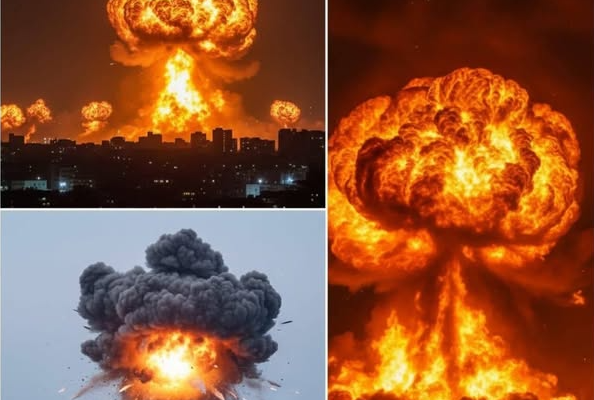
BREAKING NEWS: Maximum Worldwide Alert – The War Begins
In a development sending shockwaves across global capitals, intelligence agencies, and financial markets, multiple world powers have escalated to a state of maximum alert as open conflict erupts in key strategic regions. What began as simmering tensions has ignited into direct confrontations, with reports of missile exchanges, naval blockades, cyber assaults, and troop mobilizations pouring in from the Middle East, Eastern Europe, and the Indo-Pacific. Officials describe the situation as fluid and extremely dangerous, with the risk of a broader global conflagration higher than at any point since the mid-20th century.
The Spark in the Strait
The immediate flashpoint centers on the Strait of Hormuz, the narrow chokepoint through which roughly 20% of the world’s oil passes. After weeks of fragile ceasefire negotiations following earlier U.S.-Israeli strikes on Iranian facilities, President Donald Trump publicly rejected Iran’s latest counterproposal as “totally unacceptable” and “garbage.” Trump stated the ceasefire was on “massive life support,” signaling potential resumption of major combat operations.
Iranian forces responded by intensifying efforts to control shipping lanes, with reports of drone swarms targeting commercial vessels and allied military assets in the Gulf. UAE and Israeli defenses, bolstered by U.S. support including Iron Dome batteries, have engaged incoming threats. Preliminary casualty figures from the broader conflict already stand in the thousands: over 3,400 in Iran, 2,700 in Lebanon, and dozens more across Gulf states.
Defense Secretary Pete Hegseth testified before Congress that the Pentagon has contingency plans both to escalate and to reposition forces. The U.S. has already spent approximately $29 billion on operations related to the Iran conflict. Oil prices have surged in response, pushing U.S. inflation higher and prompting discussions of suspending the federal gas tax.
Multi-Front Escalation
The crisis is not isolated. In Lebanon, Israeli operations continue amid Hezbollah drone attacks, with recent strikes killing civilians and militants alike. Displacement orders have been issued for southern villages, while cross-border incidents threaten to unravel any remaining de-escalation efforts.
Further afield, tensions in Europe and Asia compound the alarm. Belarusian President Lukashenko has announced military mobilization, citing preparations for potential wider conflict linked to the ongoing Russia-Ukraine dynamics, despite separate U.S.-brokered ceasefire talks there. In the Indo-Pacific, heightened naval activity raises fears of opportunistic moves by other actors.
Cyber operations are reportedly rampant. Power grids, financial systems, and communication networks in multiple countries show signs of probing attacks. Governments have activated emergency protocols, with some nations ordering partial blackouts or increased encryption on critical infrastructure.
Global Reactions and Markets in Turmoil
World leaders have convened emergency sessions. NATO allies are consulting on Article 5 implications should the conflict spill further. China, a major buyer of Iranian oil, has urged restraint while quietly positioning assets. The UN Security Council remains deadlocked, with veto powers on opposing sides.
Financial markets reacted violently. Brent crude spiked above $100 per barrel in early trading. Stock indices plunged, with defense and energy sectors bucking the trend. Gold and Bitcoin soared as safe havens. Airlines canceled flights over contested airspace, and shipping companies rerouted around the Gulf at enormous cost.
Ordinary citizens are feeling the strain. Gas prices at pumps in the U.S. and Europe have jumped, food supply chains show early signs of disruption from higher energy costs, and panic buying has been reported in some cities.
Historical Parallels and Strategic Analysis
This moment echoes past great-power crises: the 1973 Yom Kippur War’s oil shock, the 1962 Cuban Missile Crisis brinkmanship, and the cascading alliances of 1914. Yet modern weaponry—hypersonic missiles, AI-directed drones, cyber tools, and space-based assets—makes the stakes unprecedented. A single miscalculation could escalate to nuclear thresholds, though both sides appear, for now, to be calibrating responses to avoid total war.
Experts point to several underlying drivers. Iran’s nuclear ambitions and regional proxy network clashed with U.S. and Israeli security red lines. Control of energy routes became the battlefield for economic dominance. Great-power competition between the U.S.-led bloc and revisionist states amplified every local dispute.
On-the-Ground Realities
From Tehran, reports describe resilient but weary populations amid power shortages and strikes on military sites. In Tel Aviv and Gulf capitals, sirens sound intermittently as interceptors light up the sky. Soldiers on both sides face the fog of war: drone footage, jammed communications, and the psychological toll of 24/7 vigilance.
Humanitarian organizations warn of impending crises. Refugee flows strain borders, medical supplies dwindle in conflict zones, and environmental damage from oil spills or damaged facilities could linger for decades.
The Path Forward: Diplomacy or Descent?
President Trump has indicated openness to deals that address core issues—nuclear disarmament, free navigation of the Strait, and regional security guarantees—but insists on strength. Iranian officials vow to defend sovereignty and retaliate against “aggression.”
Backchannel talks continue, involving intermediaries from Turkey, Oman, and others. Congressional hearings in Washington grill officials on costs, strategy, and exit ramps. Public opinion worldwide is divided: some demand decisive action against perceived threats, others protest the human and economic toll.
As night falls in one theater and dawns in another, military commanders maintain maximum readiness. Satellites track missile launches in real time. Hotlines between capitals buzz with urgent communications.
What Comes Next?
The coming hours and days will prove decisive. Will cooler heads prevail through renewed diplomacy, perhaps with economic incentives or security assurances? Or will tit-for-tat strikes spiral into a regional war with global repercussions—supply chain collapse, inflation spikes, potential great-power involvement, and loss of life on a tragic scale?
Analysts urge preparation without panic. Stock emergency supplies, stay informed through credible sources, and support diplomatic efforts. For markets and governments alike, resilience planning is now paramount.
This is a maximum worldwide alert. The war has begun—but its scope, duration, and ultimate resolution remain unwritten. History will judge the decisions made in these tense moments. Citizens and leaders must now choose between escalation’s abyss and the hard work of negotiated peace