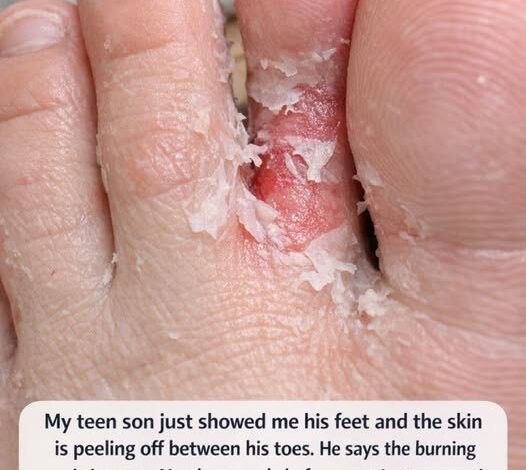
It was late in the evening when my teenage son walked into the kitchen with a look of visible discomfort on his face. He sat down at the table and reluctantly took off his sneakers and thick sports socks to reveal a sight that sent an immediate wave of panic through me. The skin between his toes was peeling heavily, leaving raw, pink tissue exposed, and he winced visibly when I took a closer look. He confessed that the burning sensation he had been experiencing for the past few days had become intense and unbearable. With a major sports practice scheduled for the very next morning, I knew I had to act fast to find a remedy. The clock was ticking, and the fear that he would be sidelined due to a painful condition was weighing heavily on both of our minds.
Seeing his distress made me do some quick research, and it quickly became clear that this was not just a typical case of sweaty feet. It was a classic presentation of athlete’s foot, a highly common and incredibly frustrating fungal infection that thrives in warm, damp, and dark environments. The fungus, known scientifically as tinea pedis, thrives in dark, humid, and warm environments, making the inside of a sweaty athletic sneaker the perfect breeding ground. When the skin becomes compromised, the fungi can penetrate the outer layers and begin feeding on keratin, a protein found in human skin and nails. This leads to the characteristic peeling, itching, and burning sensation. As the condition progresses, the skin can crack and bleed, which not only causes immense pain but also creates an open door for secondary bacterial infections. If ignored or treated incorrectly, a simple fungal infection can morph into a significant problem that could keep an athlete off the field for an extended period. The good news, however, is that it is highly treatable if you catch it early and attack it with the right methods.
To get him through practice the next day and start the healing process, I immediately put together an intensive care plan. The first step was a gentle but thorough cleansing. I had him wash his feet using cool water and a mild, antibacterial soap. Hot water can further irritate the burning skin, so cool or lukewarm water is essential for soothing the intense inflammation. Once the feet were clean, the next step was critical: drying them completely. Moisture is the primary breeding ground for the fungus, so I made sure to use a clean towel and specifically pat the areas between his toes until they were bone dry. Leaving even a hint of dampness can render the subsequent treatments less effective and prolong the infection.
Next, we needed to address the fungal issue directly. I reached for a reliable over-the-counter antifungal cream containing active ingredients like clotrimazole or terbinafine. Applying a thin layer of the cream across the affected areas provided an almost immediate, cooling relief from the burning sensation. However, one of the most important lessons I learned during this process is that consistency is key. Even if the symptoms begin to disappear and the skin starts to heal, you must continue applying the antifungal treatment for the full recommended duration, usually about two to four weeks depending on the severity. Stopping too early allows the lingering fungal spores to multiply and come back with a vengeance.