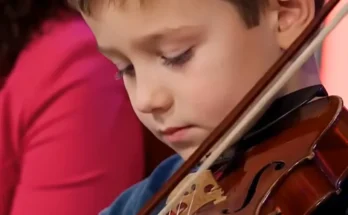
PART 1 — THEY MOCKED HIS VIOLIN — THEN HE PLAYED FOR HIS MOM IN HEAVEN
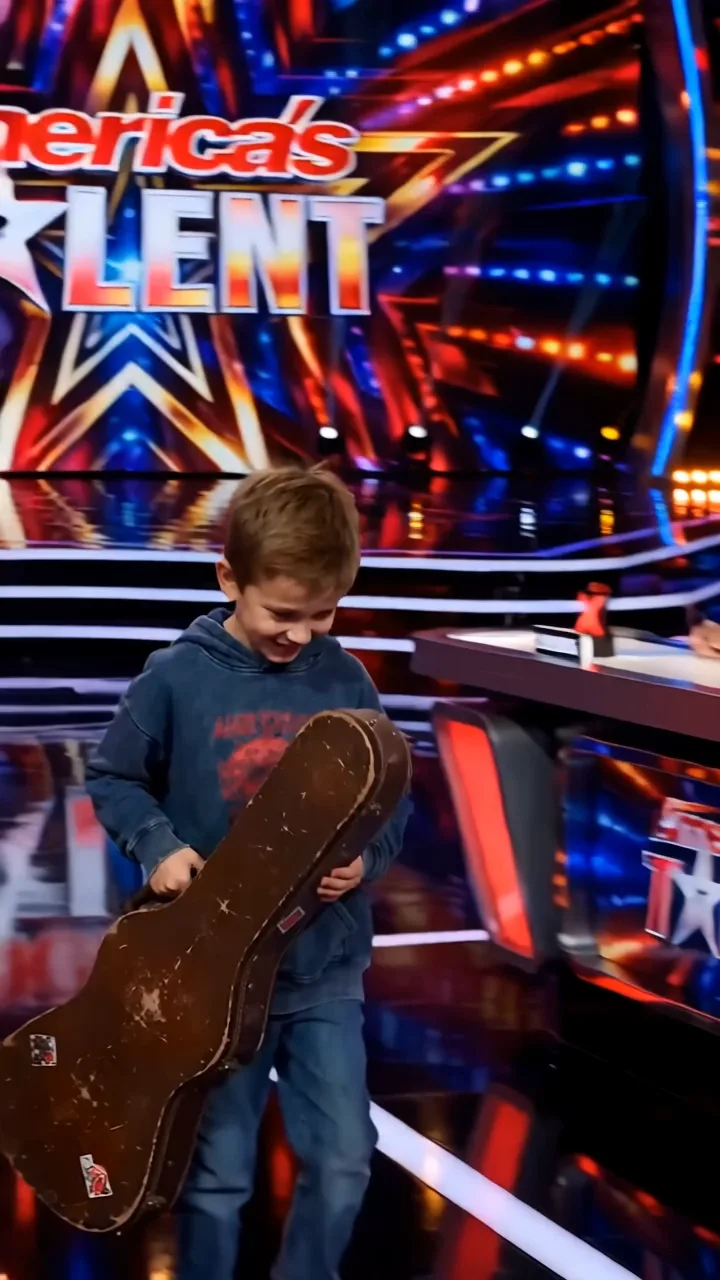
The stage lights blazed across the America’s Got Talent auditorium, illuminating thousands of faces as the next contestant stepped into view.
He was just a little boy, small enough that the towering stage seemed to swallow him whole.
His innocent face looked solemn beneath the bright lights. With both arms wrapped tightly around an old leather violin case, he walked toward the judges’ table. The case was scratched and worn, its faded stickers peeling at the edges after years of use.
The audience grew quieter as the boy stopped in front of the judges.
He looked up at them with wide, clear eyes that carried a sadness far beyond his years.
For a moment, he seemed unsure of what to say. Then he gathered himself and spoke in a soft, heartfelt voice.
“I want to play a song for my mother in heaven.”
The words hung in the air.
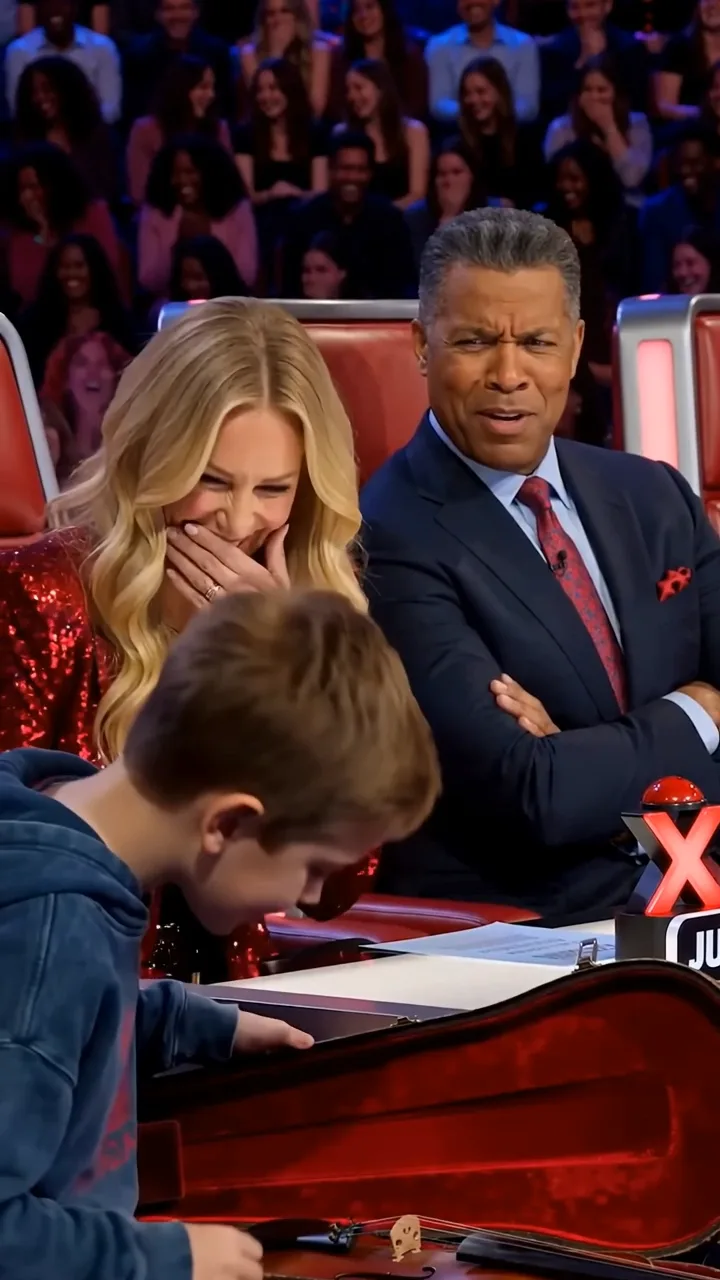
Several female judges exchanged glances before letting out small, uncertain giggles, covering their mouths as though they didn’t quite know how to react. One Black judge sat with his arms crossed, his brow furrowed in confusion as he studied the child standing before him.
The boy didn’t respond to their reactions.
He carefully lowered the old case and opened it.
Inside was a deep red velvet lining, its rich color contrasting with the worn leather exterior. Nestled within was a polished wooden violin, gleaming beneath the stage lights.
The instrument looked enormous against the boy’s small frame.
He lifted it with both hands, handling it with surprising care, and brought it toward his shoulder.
A male judge shook his head with a faint, dismissive laugh. He leaned toward his microphone, glanced at the oversized instrument, and delivered his remark for the audience to hear.
“That violin looks bigger than you, kid.”
Scattered laughter rose from the auditorium.
People in the audience whispered to one another, watching the tiny boy struggle to hold an instrument that seemed almost too large for him. Some expected a shaky, screeching performance. Others looked on with skeptical smiles, already anticipating a musical disaster.
But the boy didn’t look toward the crowd.
He didn’t argue with the judge.
And he didn’t put the violin down.
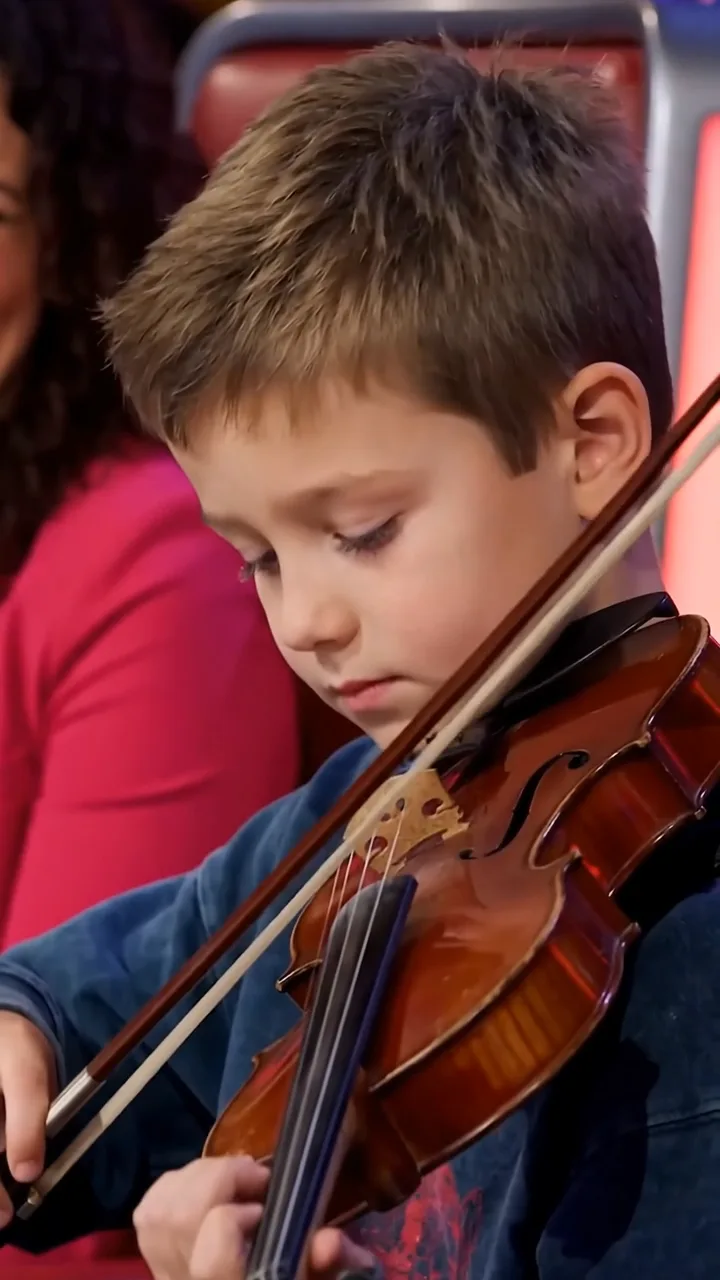
Instead, he gently tucked the instrument beneath his chin and adjusted it against his shoulder. His small fingers found their places along the polished fingerboard.
Then he closed his eyes halfway, shutting out the bright lights, the whispers, and the laughter.
His expression changed.
For that brief moment, he no longer seemed to be standing in front of a panel of powerful judges or thousands of strangers.
He looked as though he were thinking only of the person he had come there to reach.
Slowly, he raised the bow.
The entire auditorium waited, expecting the first awkward scrape of a child struggling with an instrument too big for him.