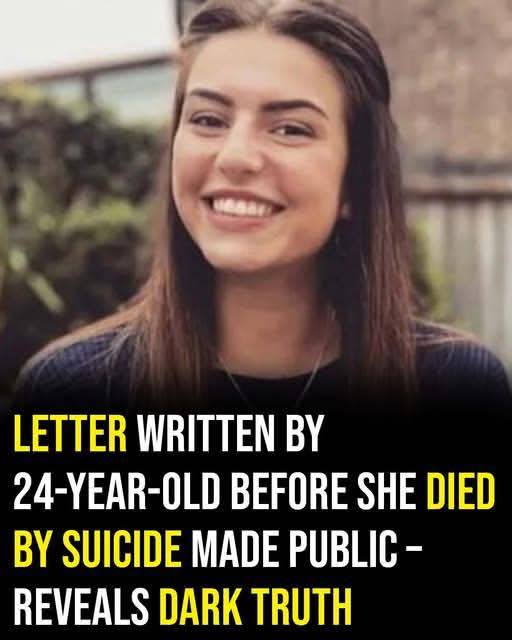
Rebecca McLellan, 24, who grew up in Clacton, Essex, battled bipolar disorder and was under the supervision of the Norfolk and Suffolk NHS Foundation Trust. Her mother claims that the trust did not provide the necessary support during critical times, which ultimately contributed to her tragic death.
As reported by the BBC, McLellan was initially treated by a psychiatrist in Essex but was discharged upon learning of her move to Ipswich for employment.
“Her GP also dismissed her because of the relocation,” her mother stated. “From the very beginning of her diagnosis, there was a significant lack of support, even though Rebecca was earnestly trying to get help.
“She was profoundly let down.”
McLellan, who served with the East of England Ambulance Service during the pandemic, found herself without a doctor or psychiatrist. Eventually, she located a new GP in Ipswich, who referred her for specialized care.
She was assigned a care coordinator, but he took a leave of absence. McLellan attempted to find out who would take over his responsibilities and sent multiple emails, but none received a response.

According to her mother, there were times when the lack of support was so intense that her daughter felt compelled to adjust her own medication during difficult moments due to the absence of professional guidance. She even started ordering and paying for her own medications online.
In August, amidst a mental health crisis, she sought help at a mental health unit in Ipswich and refused to leave until she received the assistance she needed.
“She told them she would drive anywhere in Norfolk and Suffolk to see someone, but they insisted she leave – even threatening to call the police,” her mother recounted.
“The absence of support shaped her perspective on the future. Rebecca was anxious about not being well enough to work. Her job was her passion.”
Natalie, McLellan’s mother, shared that an urgent referral was made to evaluate her daughter’s medication, but the trust canceled it. When McLellan finally met with a psychiatrist three weeks later, she was told she would need to start taking lithium—a change her mother described as “terrifying.”
She feared that this specific medication would alter her personality and hinder her ability to work, which was incredibly important to her.
Tragically, just three weeks later, McLallen took her own life.

During the inquest, it was revealed that McLellan had been battling with her mental health. While working at the East of England Ambulance Service, she had 18 sessions with psychotherapist Darren Monsigneur, who labeled her as “high risk” for suicide. Monsigneur offered to continue therapy for free, but she chose not to accept the offer. Additionally, she attended four sessions with psychiatrist Dr. Kavitha Devarajan, wrapping up their last meeting in September 2023.
In a handwritten note, McLellan voiced her dissatisfaction with the mental health system, particularly criticizing the Norfolk and Suffolk NHS Foundation Trust (NSFT) for consistently failing to respond to her requests for assistance.
A video presented at the inquest showed McLellan at NSFT’s Ipswich clinic, asking to speak with a mental health professional. The receptionist informed her that no one was available and threatened to call security if she did not leave.
In a letter penned by McLellan, she conveyed the despair she felt, stating, “People can survive pretty much everything as long as they can see an end in sight. Unfortunately for me, I cannot. All I can do is wait for the inevitable fall again.”
She continued, “I miss the person I used to be. Unfortunately, that girl is long gone. I’ve been running this race for a little too long, and now my legs are tired.”
She concluded her letter with, “I know there are those out there who love me, and to those people I thank you from the bottom of my heart. I love you all tremendously. Please know that I tried. I really did.”

Anthony Deery, the chief nurse at the NHS trust, expressed: “We deeply regret the immense sorrow that Rebecca’s tragic passing has brought about.
“We have conducted a thorough investigation into the care Rebecca received, and we want to extend our gratitude to her family and friends for their essential input during this process.
“From the lessons learned following Rebecca’s death, we have implemented a new protocol aimed at improving our response when a young individual arrives at a mental health unit in distress without a scheduled appointment.
“We will carefully examine the coroner’s findings and take any necessary actions to ensure we provide safer, more compassionate, and improved care.”
McLellan’s mother characterized her to the media as a “loving person,” “sensitive,” “kind,” and “fiercely loyal,” known for advocating for others.
After the inquest, she stated outside the court: “[My daughter] sought help, she fought for assistance, she wanted to take charge of her life.
“She was denied that opportunity; she did not receive the consistent care that she rightfully deserved.”
Please SHARE this article with your loved ones on Facebook.
Bored Daddy
Love and Peace